
Free PSAT Practice Test 2026
A full-length digital PSAT/NMSQT with timed, adaptive modules and a score estimate, plus four skill drills built for your phone. All free, no account needed.
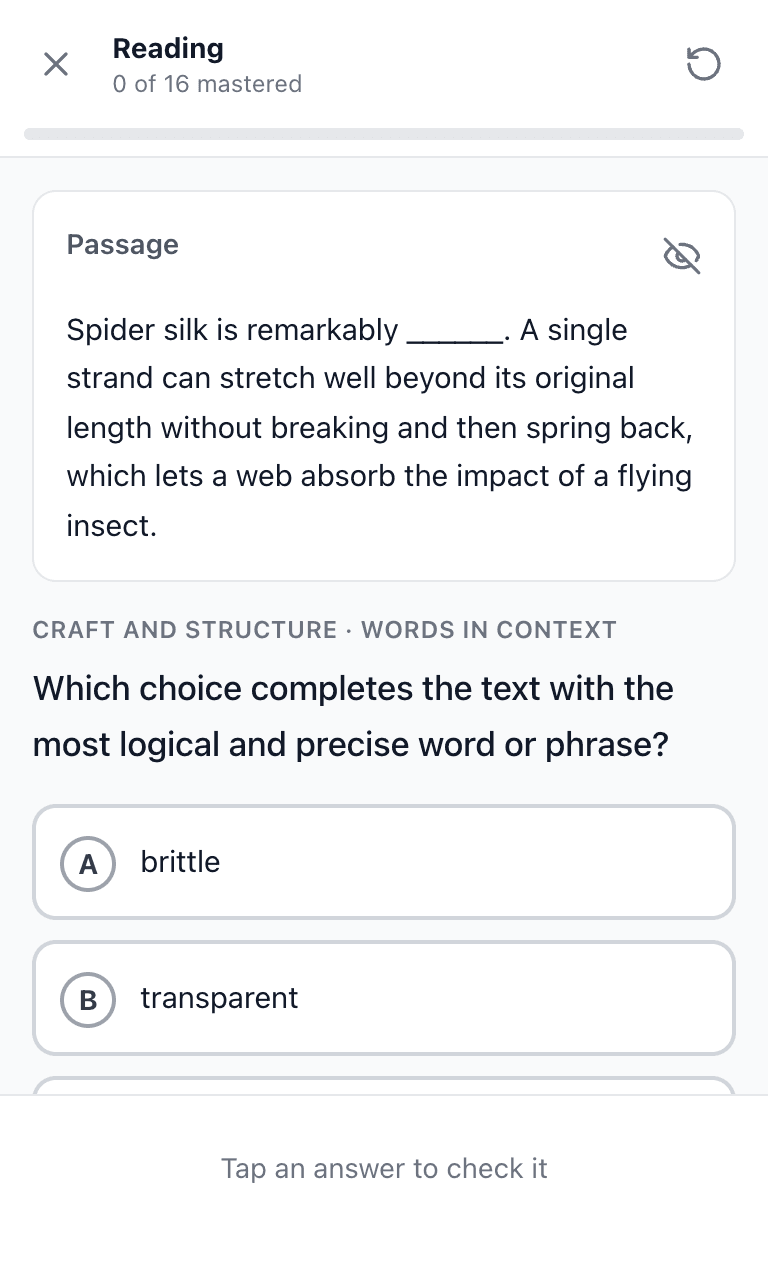
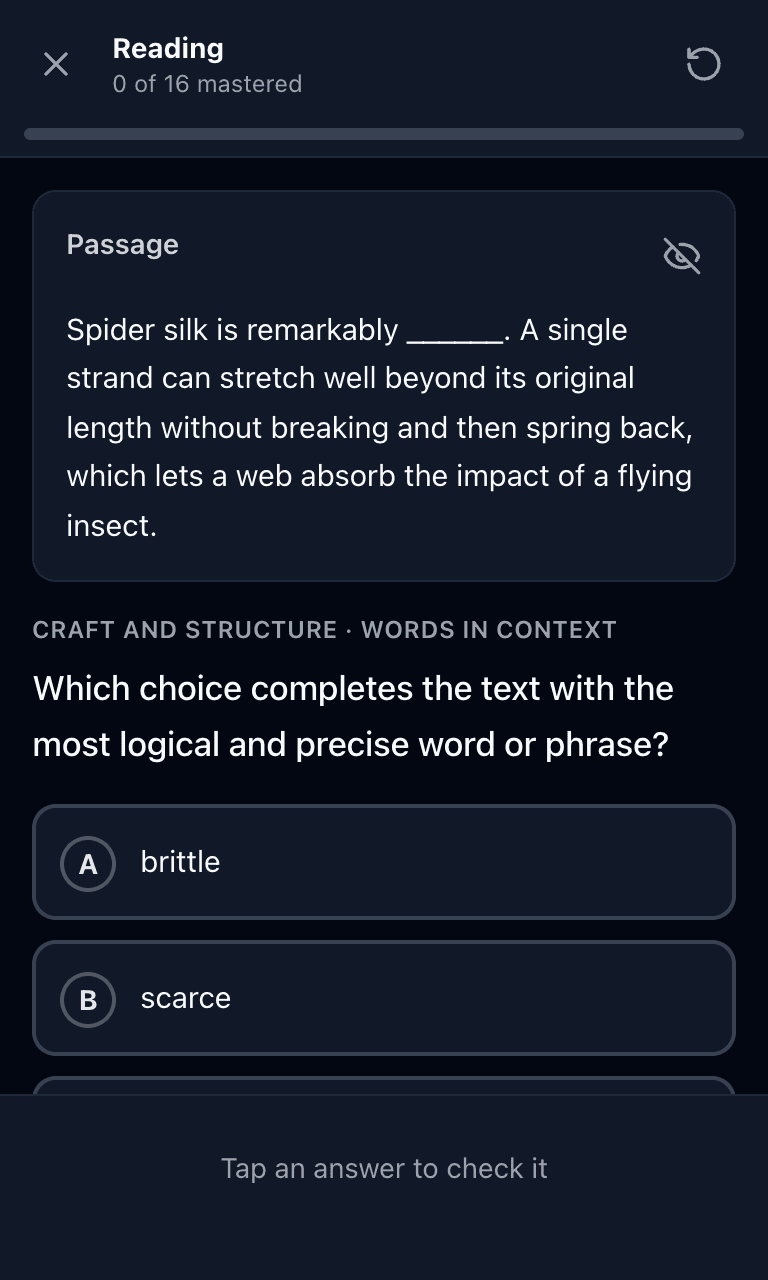
Train on mobile
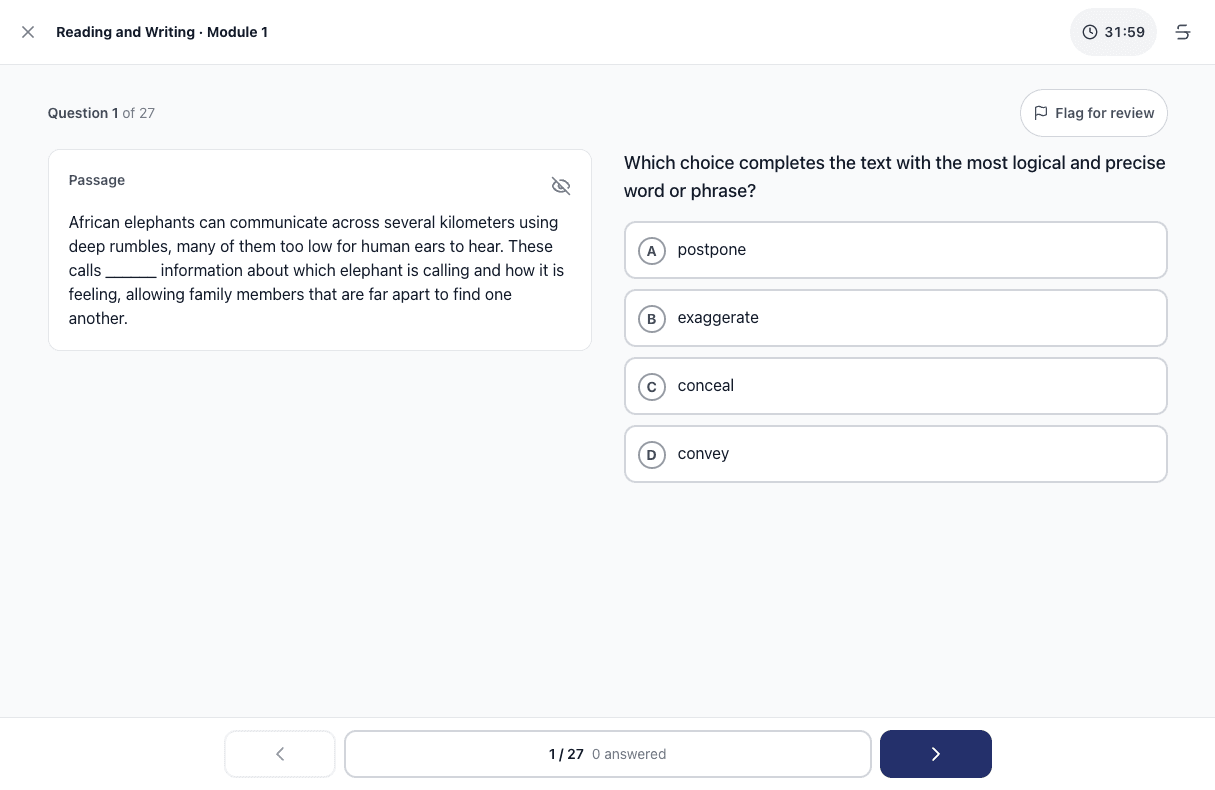
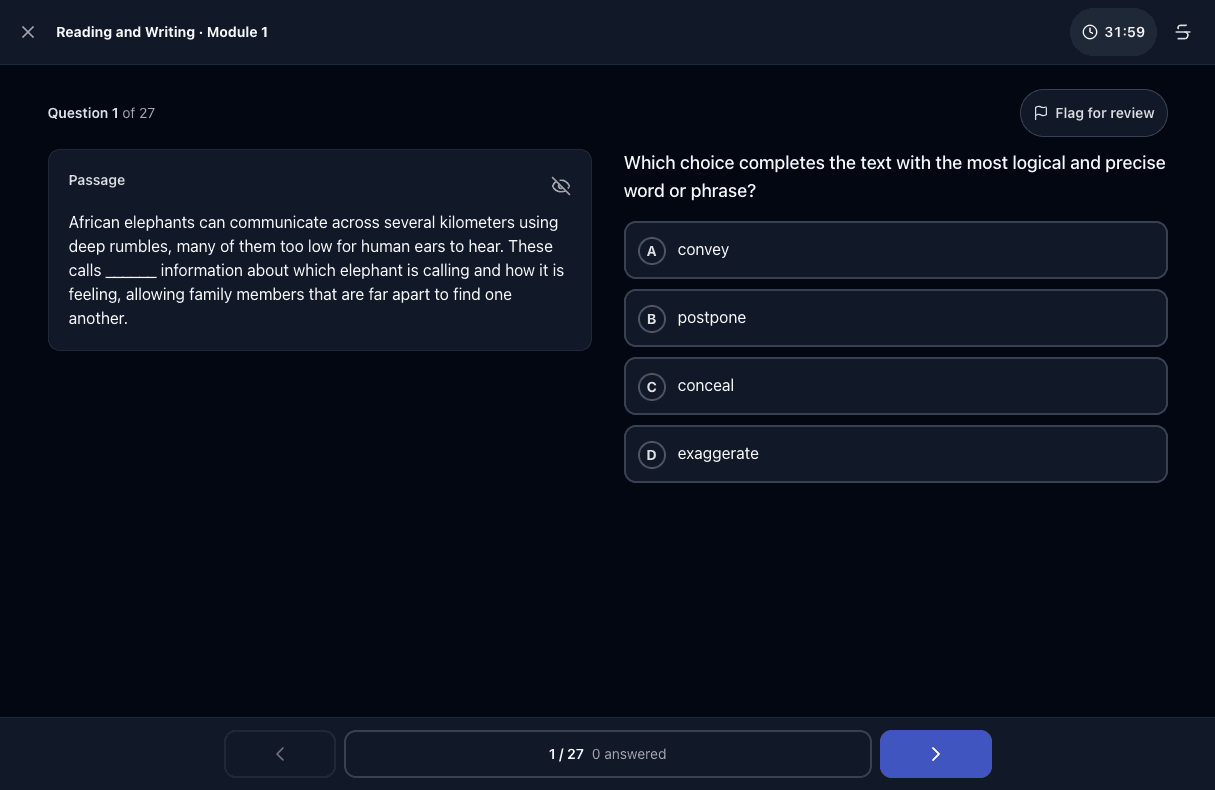
Test on desktop
The PSAT exam at a glance
The digital PSAT/NMSQT has 98 questions in 2 hours 14 minutes: Reading and Writing (54 questions, two 32-minute modules) and Math (44 questions, two 35-minute modules), with a calculator allowed on all of Math. It is adaptive by module and scored 320 to 1520, with each section scored 160 to 760. It is given to 10th and 11th graders in the fall (the PSAT 10 is the same test in the spring), and juniors' scores are used for the National Merit Scholarship Program through a Selection Index of 48 to 228.
Tigertest has a full-length adaptive PSAT practice test with a score estimate and four skill drills that teach the basics first. All of it is free with no account required.
- Questions
- 98 (54 Reading and Writing, 44 Math)
- Time
- 2 hours 14 minutes, plus a 10-minute break
- Score
- 320 to 1520 (160 to 760 per section)
- National Merit
- Selection Index: (2 x Reading and Writing + Math) / 10
- Calculator
- Allowed on all of Math (built-in graphing calculator)
- Given by
- College Board, in the Bluebook app at school
Updated by the Tigertest team. Practice questions follow the published digital PSAT/NMSQT specifications. Exam rules change, so confirm current details with College Board.
How It Works
Skill Drills on Your Phone
Four drills: Reading, Writing, Algebra and Advanced Math, and Data and Geometry. Each opens with short Basics lessons, then one question at a time, one tap to check, an explanation right away, and every miss comes back until you have mastered it.
Full Test on a Computer
The real structure and timing: four modules, a countdown clock, flag for review, answer eliminator, calculator and reference sheet, and a break between sections. Finish with an estimated score and a plan for what to drill next.
Built on the Digital PSAT Blueprint
Each section reports four skill areas. The practice test matches their approximate share of the real test, so your results show exactly which area is holding your score back.

How to Raise Your PSAT Score
1. Know why you are taking it
In 10th grade the PSAT is a low-stakes preview of the SAT. In 11th grade the PSAT/NMSQT is also the entry to National Merit, so look up last year's Selection Index cutoff for your state and set your goal from it.
2. Learn the basics, then drill
Ten minutes a night on your phone beats a weekend cram. Start each drill with its Basics lessons, then work through the questions until every one is mastered. Punctuation rules and linear equations repeat on every test, so they are the fastest points for most students.
3. Win the first module
The second module of each section depends on how you do in the first. Careful, accurate work early opens the harder module, and only the harder module can reach the top scores. Slow down on the first ten questions and check your arithmetic.
4. Take the full test under real conditions
Sit the whole thing in one go on a computer, with the timer on and your phone in another room. Then review every miss and drill the weakest skill area. There is no penalty for guessing, so never leave a question blank.
PSAT Frequently Asked Questions
What is on the digital PSAT/NMSQT?
Two sections, each split into two modules. Reading and Writing has 54 questions in two 32-minute modules, and Math has 44 questions in two 35-minute modules, with a 10-minute break between sections. That is 98 questions in 2 hours and 14 minutes, the same layout as the digital SAT. The Tigertest practice test uses the same structure and timing.
How is the PSAT scored?
Each section is scored from 160 to 760, for a total from 320 to 1520. The test is adaptive: how you do on the first module of a section decides whether the second module is easier or harder, and only the harder path reaches the top scores. Tigertest converts your correct answers into an estimated section score with a typical curve. It is an estimate, not an official score.
What is the National Merit Selection Index?
For 11th graders who take the PSAT/NMSQT, National Merit Scholarship Corporation uses a Selection Index: two times the Reading and Writing score plus the Math score, divided by 10, which runs from 48 to 228. The cutoff for Semifinalist status is set separately for each state and changes every year, so check the latest figures for your state.
How is the PSAT different from the SAT?
The format, question types and timing are the same, and both have a built-in calculator for all of Math. The PSAT is pitched a little easier and is scored on a lower scale, 320 to 1520 instead of 400 to 1600. The PSAT/NMSQT is given in the fall to 10th and 11th graders, and the PSAT 10 is the same test given in the spring. Practicing for one is practice for the other.
Is this an official PSAT practice test?
No. Every question is original, written to the published digital PSAT/NMSQT specifications for content, question types and difficulty. Tigertest is not affiliated with or endorsed by College Board or National Merit Scholarship Corporation. The practice test, its score and explanations, and all four drills are free with no account required. Use it alongside the official practice tests in Bluebook.
I teach PSAT prep. Can my students use Tigertest?
Yes, for free. Make a class at tigertest.io/teach, post one link, and students join with just their name. You see who practiced, their test scores and the topics your class misses most.
Related practice tests
Every test on Tigertest is free and needs no account to start.
- GED Practice TestHigh school equivalency · RLA, Math, Science, Social Studies
- Praxis Core Practice TestETS · Reading 5713, Writing 5723, Math 5733
- SAT Practice TestDigital SAT · Reading and Writing, Math
- ACT Practice TestEnhanced ACT · English, Math, Reading, Science
- TEAS Practice TestNursing & allied health admissions
- HESI A2 Practice TestNursing school admissions