
Free Times Tables Practice
From the 2s, 5s and 10s up to 12 × 12, in the order school teaches them. A short lesson for every table, then drills and practice checks like the Year 4 MTC. Free, no account needed.
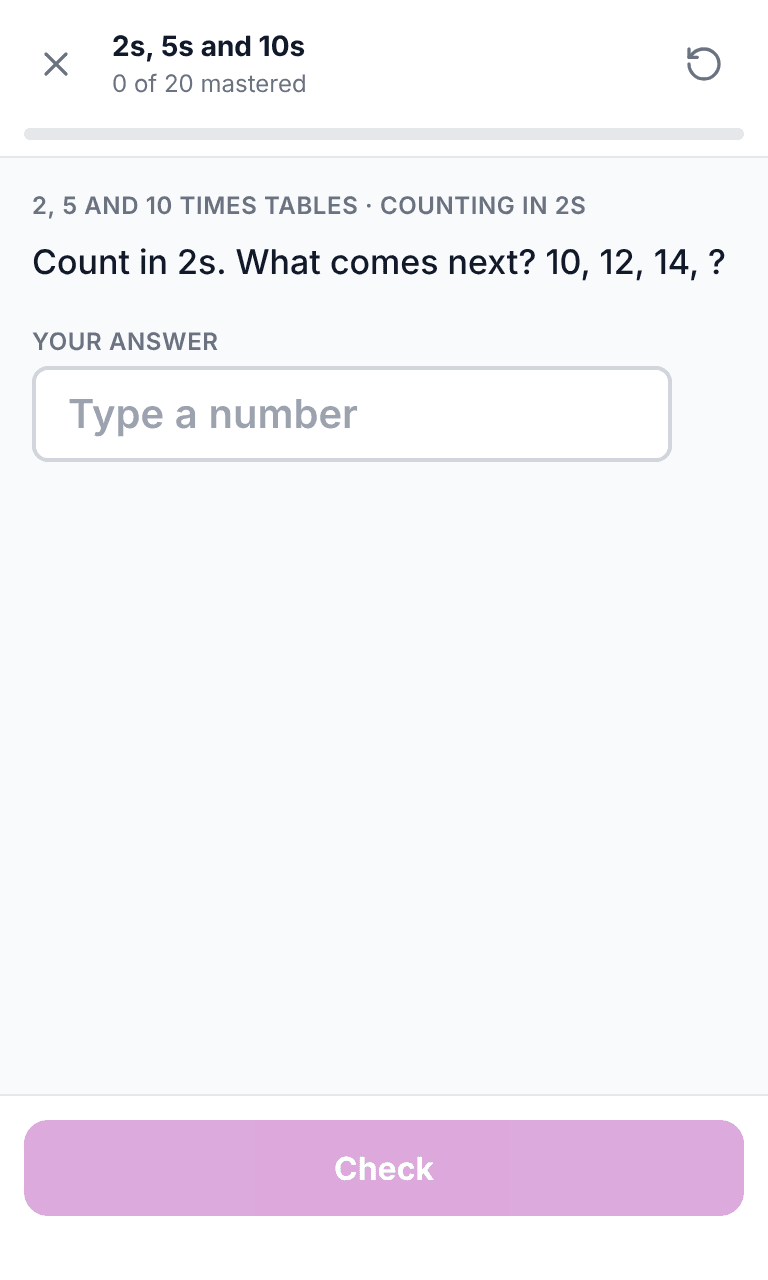
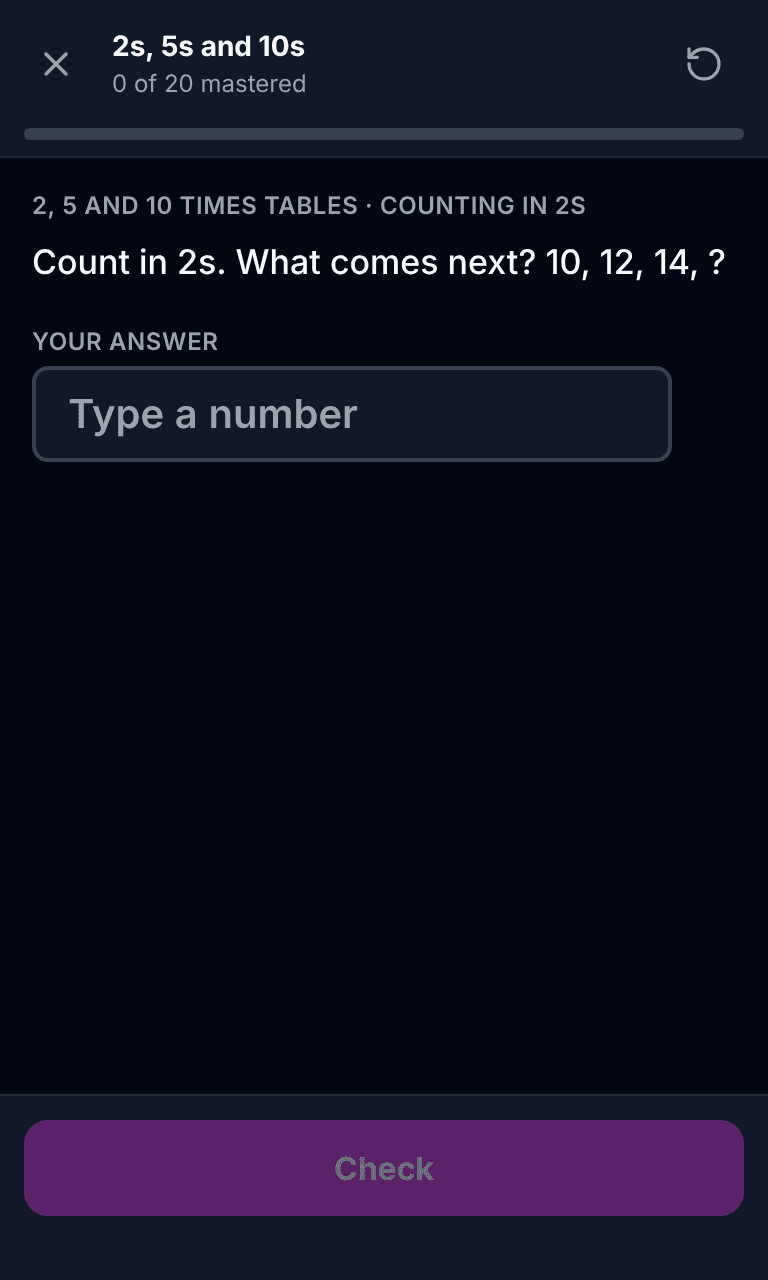
Train on mobile
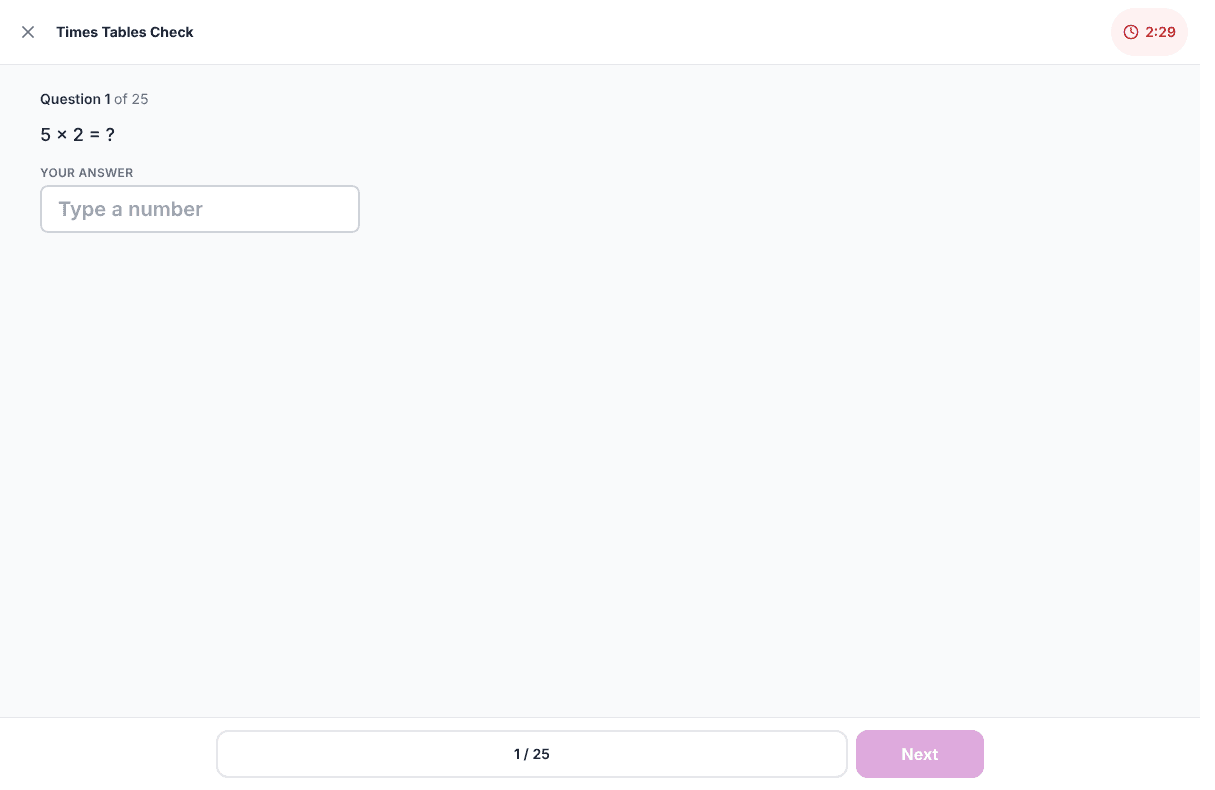
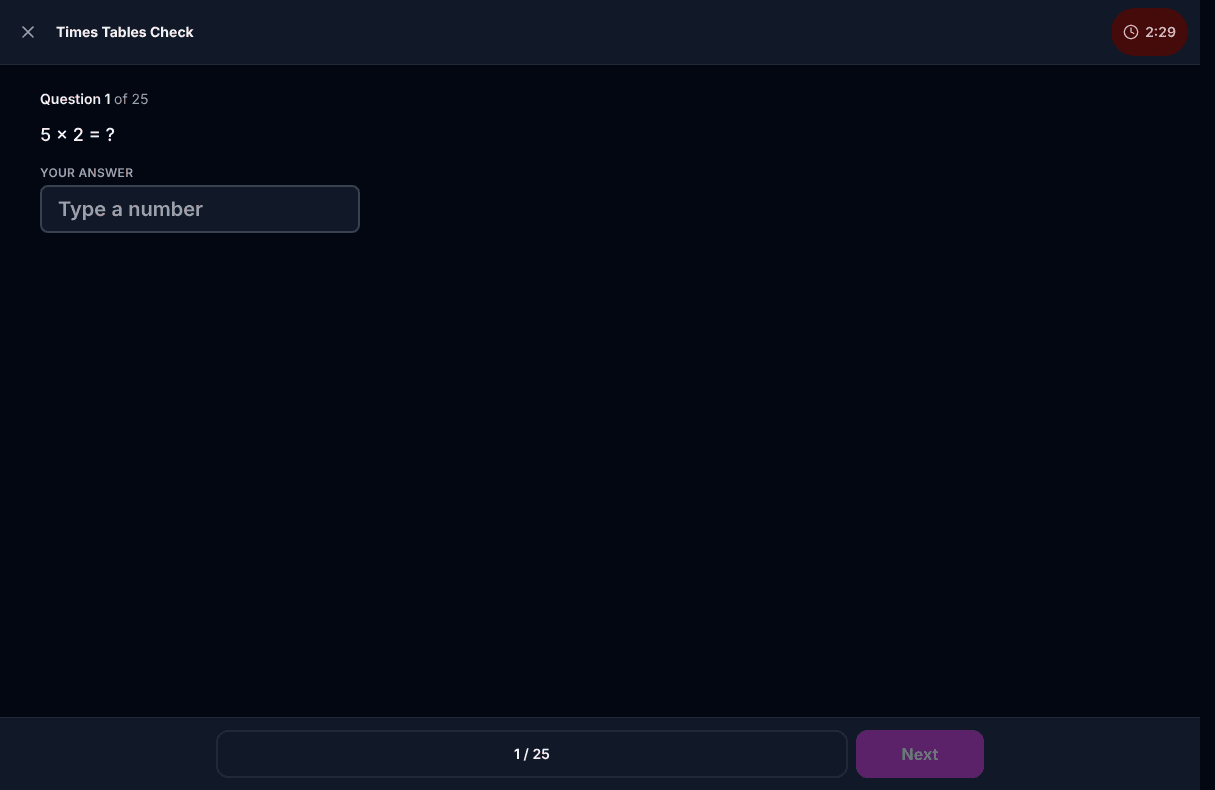
Test on desktop
The Times Tables exam at a glance
The Multiplication Tables Check (MTC) is a statutory on-screen check for Year 4 pupils in England, taken at school in June. Children answer 25 multiplication questions on the 2 to 12 times tables, with 6 seconds to type each answer and a 3-second pause between questions. It is multiplication only, the 6, 7, 8, 9 and 12 times tables come up most, and a fact and its reverse (such as 8 × 6 and 6 × 8) never appear in the same check. There is no pass mark; schools see each child's score out of 25.
TigerTest has four 25-question practice checks (the Year 2 tables, the Year 3 tables, then two full Year 4 checks) and six drills that each start with a short lesson: a trick for every table, dividing and word problems. All of it is free with no account required.
- Who takes it
- Year 4 pupils in England, in June
- Questions
- 25, multiplication only, 2 to 12 times tables
- Time
- 6 seconds a question, 3-second pause between
- Passing score
- No pass mark; a score out of 25
- Curriculum
- 2, 5 and 10 in Year 2; 3, 4 and 8 in Year 3; all to 12 × 12 in Year 4
- Given by
- The child's school, on the Standards and Testing Agency service
Updated by the TigerTest team. Practice questions follow the national curriculum in England for mathematics and the Standards and Testing Agency's multiplication tables check assessment framework. Exam rules change, so confirm current details with Standards and Testing Agency: multiplication tables check assessment framework.
How It Works
A Lesson, Then a Drill
Each drill starts with a short lesson your child taps through, like doubling for the 4s or 5 lots and 2 lots for the 7s, then 20 questions from easy to hard. Type the answer, see straight away if it is right, and every miss comes back until it is learned.
Practice Checks
Four checks of 25 questions, one at a time with no going back, like the Year 4 Multiplication Tables Check. Check 1 is just the 2s, 5s and 10s; Checks 3 and 4 use every table. Take them on the 6-seconds-a-question clock or untimed.
In the Order School Teaches Them
The drills follow the national curriculum in England, so your child practises the tables their class is learning now, each with its own trick.

Teach a Primary Class?
Set it as homework for free: share one link, children join with just their first name, and you see who practised, their check scores and the tables your class finds hardest.
Make a class at tigertest.io/teachHow to Learn the Times Tables
1. Understand before you memorise
3 × 4 means 3 lots of 4. A child who knows that can always work an answer out, and working it out a few times is what makes it stick. The first lesson in the first drill starts there.
2. Use the facts you already know
Swapping the numbers round halves the work: know 3 × 8 and you know 8 × 3. The 4s are the 2s doubled, the 8s are the 4s doubled, the 9s are the 10s take away one lot. Each lesson teaches the trick for its table.
3. Little and often
Five or ten minutes a day beats an hour at the weekend. A drill is 20 questions and the missed ones come back, so a short session always ends on the facts that need it most.
4. Add the clock last
The Year 4 check gives 6 seconds a question, which means knowing the answer rather than working it out. Take the checks untimed first, then switch the clock on once the tables feel easy.
Times Tables Questions
Which times tables should my child know by which year?
The national curriculum in England sets the order. In Year 2 children learn the 2, 5 and 10 times tables, in Year 3 the 3, 4 and 8 times tables, and by the end of Year 4 every table up to 12 × 12. The TigerTest drills follow exactly that order, so a Year 2 child can start at the top and stop when they reach the tables their class has not done yet.
What is the Multiplication Tables Check?
A short on-screen check every Year 4 pupil in England takes at school in June. It is 25 multiplication questions on the 2 to 12 times tables, with 6 seconds to type each answer and a 3-second pause between questions. The 6, 7, 8, 9 and 12 times tables come up most. There is no pass mark; the school sees a score out of 25.
My child is younger than Year 4. Is this too hard?
No. Start with the 2s, 5s and 10s drill and Check 1, which only uses those three tables. Check 2 adds the Year 3 tables, and only Checks 3 and 4 use everything to 12 × 12. Any check can be taken untimed, so there is no rush while the tables are new.
What are the lessons?
Each drill opens with short lessons a child taps through: what × means (lots of), swapping the numbers round, doubling for the 2s, 4s and 8s, 5 lots and 2 lots for the 7s, 10 lots take away 1 lot for the 9s, and more. Every lesson asks the child to supply each step rather than just watch, then checks it with two quick questions. A missed drill question offers that table's trick again.
How long should we practise each day?
Five to ten minutes is plenty. One drill is 20 questions, and a check takes under three minutes. Little and often works better for times tables than one long session, and the drills bring back every question your child missed until they get it right.
Is it free?
Yes, all of it: every lesson, drill and practice check, with no account needed. An account saves progress across devices, so a child can practise on a tablet at home and a phone in the car.
I teach a primary school class. Can my students use TigerTest?
Yes, for free. Make a class at tigertest.io/teach, post one link, and students join with just their name. You see who practiced, their test scores and the topics your class misses most.
Related practice tests
Every test on TigerTest is free and needs no account to start.